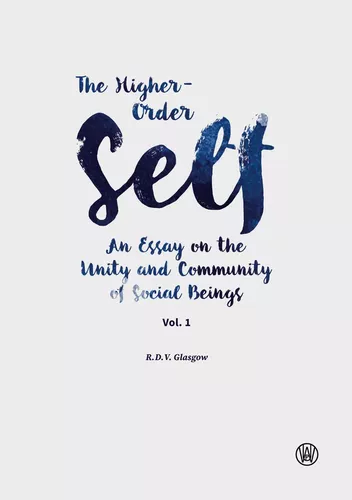
Higher-order selfhood is what emerges when a multiplicity of selves join forces to behave in their collective rather than their individual interests. Think of the evolutionary transition from unicellular to multicellular organisms and the cooperation of individual organisms such as bees or ants to form super-organisms. The book’s central question is how far human society may also come to constitute such a higher-order self – some form of organism or superorganism – and what the most appropriate unit of selfhood is, say the family, tribe, city, nation or even the whole species. What emerges is that all these manifestations of higher-order selfhood are partially flawed or fractured insofar as their constituent individuals continue to show residual lower-order selfhood. What is unique to human beings, however, is our capacity to choose the unit of higher-order selfhood with which we identify or to which we belong. This has profound ethical implications. Of notable relevance for the future of humanity is that we may choose to pursue the interests of our species in its entirety.







Es sind momentan noch keine Pressestimmen vorhanden.