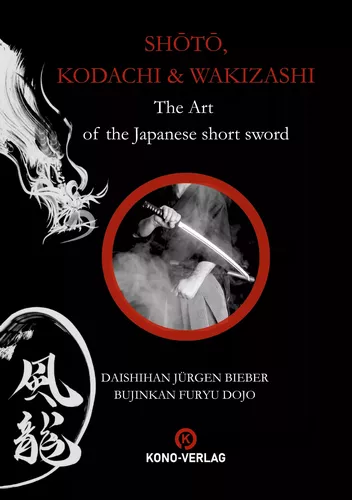
Shoto, Kodachi & Wakizashi: The Japanese Short Sword
The short sword holds a unique and often underestimated place in the history of Japanese martial arts. While the Katana has long captured the imagination, the Shoto, Kodachi, and Wakizashi were equally essential weapons - versatile tools of strategy, survival, and symbolism. This book presents a thorough exploration of these short blades, combining historical insight, technical instruction, and cultural context. From the origins of the great sword schools and their legendary masters to the practical application of forms and techniques, readers will find both scholarly detail and hands-on guidance. Subjects include Sanpo Giri, Muto Dori, Shoto Yari Dome Waza, and other essential principles of combat and defense.
Equally, the work illuminates the philosophy and spirit behind the blade. Themes such as Bushido, Seppuku, and the warrior's code of honor provide a deeper understanding of how the short sword was more than a weapon - it was a symbol of discipline, identity, and the way of the warrior.
Shoto - Kodachi & Wakizashi: The Japanese Short Sword is both a valuable training companion and a cultural study. It is written for martial artists who seek not only to refine their technique, but also to uncover the depth, significance, and enduring legacy of the Japanese short sword tradition. A resource to study, reflect upon, and bring to life in practice.
Jürgen Bieber began his journey into the martial arts at the age of 14, dedicating himself to Bujinkan Budo Taijutsu from the age of 15. In 1990, he attended his first TAI-KAI seminar with Dr. Masaaki Hatsumi in Munich - an experience that inspired him to participate in at least one TAI-KAI in Europe every year thereafter. Between 1990 and 1991, he completed advanced training as an object and personal protection specialist, gaining further expertise through many years of professional work in the security field. His development was enriched by private lessons and seminars with renowned teachers worldwide.
In 1995, he founded his first dojo to pass on his knowledge, and in 1997 he traveled to Japan for the first time to train intensively under Hatsumi Soke. From then on, he made yearly pilgrimages to Japan, deepening his study. During his very first visit, he successfully passed the Godan Test (5th Dan), personally administered by Hatsumi Soke, who would later become his mentor.
Bieber published his first book, Ninja-to: The Sword of the Ninja, in 2008. From 2009 onward, he expanded his studies to include other traditional Japanese sword arts. In 2012, he received the Menkyo Shoden in Enshin Itto Ryu Batto Jutsu, becoming one of only two teachers in Germany authorized to transmit the Enbukan tradition. Further recognitions followed: in 2013, he was awarded the Menkyo Chuden in Batto and the Bujinkan Dragon Gold Medal. In 2014, Hatsumi Soke presented him with the Shin Gi Tai Bufu Ikkan Sho.
In 2016, Machita Soke named him Shihan of Enbukan and awarded him the Menkyo Mokuroku Omote, while Hatsumi Soke honored him with the title of Yushushihan (Exemplary Master Teacher). In 2018, Bieber received the title of Daishihan (Senior Instructor) from Hatsumi Soke and the Menkyo Mokuroku Ura from Machita Soke. Two years later, he was awarded the Menkyo Omote and the Shoden Menkyo in Aizu-den Mugai Ryu Kodachi Jutsu.
Alongside his teaching activities, Bieber published Jo Jutsu: The Art of the Japanese Staff in 2020. In 2022, Machita Soke promoted him to Menkyo Ura (8th Dan).
Today, Jürgen Bieber holds the titles of Bujinkan Daishihan and Enbukan Joishihan, continuing his lifelong dedication to the preservation and transmission of the classical martial traditions of Japan.









Es sind momentan noch keine Pressestimmen vorhanden.