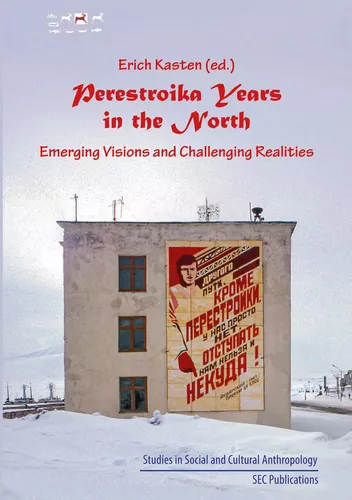
Perestroika Years in the North explores the causes, dynamics, and consequences of the profound political and economic transformation that swept across the Soviet Union from the mid-1980s onward on Indigenous lives and research with Indigenous partners. Through the policies of glasnost and the unprecedented opportunities they created for freedom of expression and public debate, Indigenous representatives were, for the first time, able to draw attention to the conditions that threatened their economic livelihoods, cultural self-determination, and ethnic identities. The dramatic changes of that time illustrate how mistrust and fear fostered by Soviet-era propaganda could be overcome once people were given the opportunity for greater control over their lives, thereby paving the way for mutually beneficial partnerships with Western counterparts. Recent developments in Russia provide a compelling reason to revisit the perestroika era from this perspective, as these developments are now retrospectively assessed through the lens of emerging narratives. Particular attention is given to the voices of those who experienced these developments firsthand and continue to live in Russia. Their reflections on the aspirations and expectations inspired by perestroika, as well as the disappointments that emerged over time, offer an essential foundation for a deeper understanding of this period and its legacy.
Erich Kasten is a social and cultural anthropologist whose research has focused on First Nations in the Canadian Pacific Northwest and Indigenous peoples of Northeast- ern Siberia. He is the director of the Foundation for Siberian Cultures (Kulturstiftung Sibirien) in Fürstenberg/Havel, Germany. Alongside his longstanding interest in the history of research in northern Siberia, since the 1980s his work has centred on com- munity driven projects to sustain Indigenous environmental knowledge, endangered languages, crafts and arts. In recent years, his research has increasingly addressed contemporary political issues affecting Indigenous communities in northern Russia.









Es sind momentan noch keine Pressestimmen vorhanden.