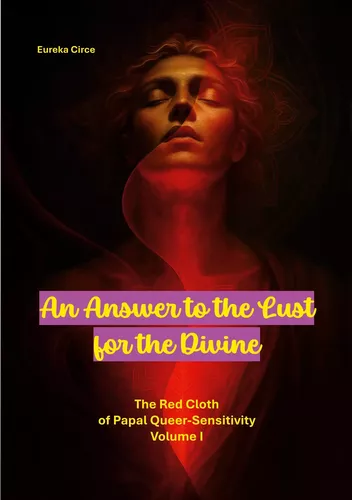
What happens when theology takes lust seriously - not as a danger, but as a source of love, dignity and faith? Lust am Göttlichen (Lust for the Divine) accompanies readers through three times seven days of Christological and sensitive theology and its practical consequences for the church - from a new reading of the Bible to culture and liturgy to exciting topics of discussion such as the ordination of women, marriage for all before the altar and freedom of conscience. The series bridges the gap between official doctrine and lived reality and advocates for a sexual ethic that remains faithful to the Gospel and respects the reality of life: human-centred, lust-friendly and life-affirming. The first part lays the foundations for a lust for the divine; the following parts show how the frame of 'creation order' shifts to creation diversity and what consequences this has for sacraments, language, pastoral care and canon law. The book invites an objective, clear and effective dialogue - with respect for tradition and clear words for a church that understands diversity as a gift and respects incarnation physically. This volume, covering days 8-14, systematically applies theological principles: it shows how the Church's interpretative framework has shifted from a fixed order of creation to a diversity of creation - theologically, biblically and critically in terms of power. Paul is read as a liberator from normative categories ('grace before law'), and pastoral consequences are drawn from this. The church's conflict with lust is analysed in detail - from the history of hostility towards lust to today's double standards and ways out of fear. At the same time, the question is asked how premarital sex can be interpreted as a possible place of grace and 'sacred intimacy' - with the striking thesis: It is not marriage that sanctifies sexuality, but lived sexuality can also sanctify marriage, because grace cannot be monopolised. The natural law argument ('natural order') is questioned in relation to the Bible, biology and experience, and instead of communion barriers, an invitation to the Eucharist should be extended.
Eureka Circe is the editor and curator of various book series on theology (such as 'House of Theological Courage' or 'Deus Ex Machina' and 'I, Circe') and on naturopathy. She has also published volumes on women's politics, including 'MAIDEN'S MANIFESTO - The Female Flame: Female Popes of Theology on the Holy Roman Chair', 'Alice and the Wonderyes - Where and Why Feminism Fails in the Catholic Church' and 'Dignitas Omnium - The Dignity of All'. Her thesis: "Artificial intelligence (AI) represents a profound turning point because it fundamentally changes the relationship between humans, knowledge and access to the world - not only technically, but also culturally, epistemologically and socially. It opens up a new access to knowledge and leads to its multiplication and democratisation: AI systems make information readily available - often without the need for traditional reading or in-depth prior knowledge. This fundamentally changes how we think, learn and understand, while at the same time promoting a new form of individualisation of thought - which can also be exemplified in spiritual belief. What's more, machines now generate meaning - texts, images, arguments - where previously only human expertise was required. This has long-term consequences for education, science, politics and religion."








Es sind momentan noch keine Pressestimmen vorhanden.